Part I
When I was planning this trip, Tashkent and Samarkand were the places I was most excited about. Whatever I read about these cities, fascinated me. The history. The food. The culture. The people. I could not wait to start exploring Uzbekistan.
I remember when my Air Astana flight landed in Tashkent, and I was walking towards the immigration counter, I could hardly believe that I had made it here. I had been trying to visit Uzbekistan for years but the visa process was too confusing. The official websites said something different than what was told to me on the phone by the folks at the consulate. I would call back the next day and they would say something completely different. It just never materialized.
But then they introduced the e-visas and within a year, I found myself standing in the immigration queue at the Tashkent airport.
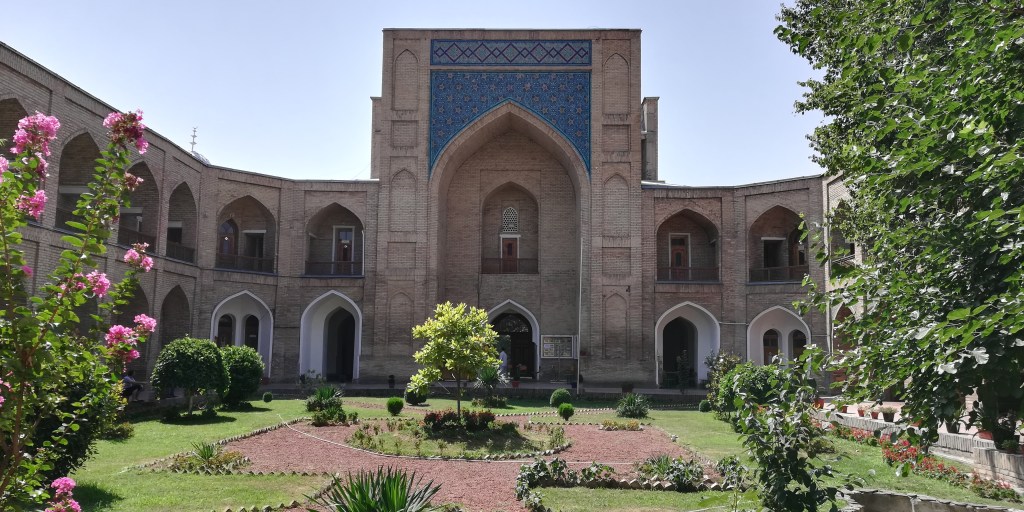
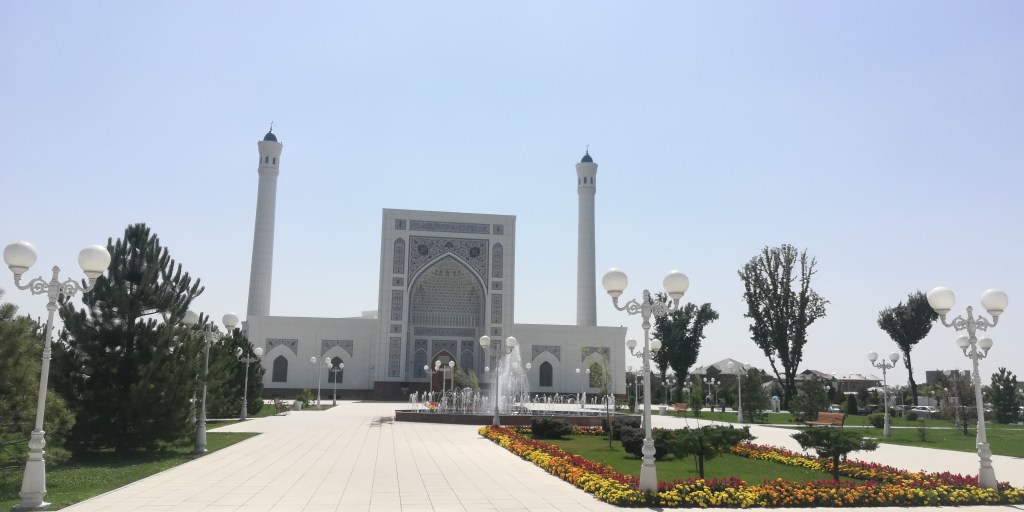
Tashkent is the biggest city of Central Asia. It is the hub of manufacturing, commercial and educational institutions in the region. Like the other places I visited during my stay in Uzbekistan, Tashkent too was an important city on the Silk Road. Many of the important landmarks of the city are from that era. Back then, the city was home to rich merchants and traders and was divided into districts basis the line of business they were involved with; district of weavers, cattle traders, metal casters etc. The city was home to several caravensarais that provided accommodation to wary travelers, trans-versing through this long, grueling, desert route. The word “Tashkent” means “Stone Village” in Uzbek; a name that originating in the 11th century, signifying the buildings that existed around the time.
During the 2nd World War, as the Germans made headway into the Soviet Union, a mass evacuation took place to relocate civilians from the warring parts of the empire. Relocating in places like the Urals, Kazakhstan, Siberia, Tajikistan and Uzbekistan, it is considered to be the biggest organised movement of civilian population in history. Tashkent was one of the main destinations for the refugees at the time. With thousands, if not millions, of new residents the market prices went up and the locals had to share their dwellings. Several famous books in Soviet literature have been written about what life was like during this period.
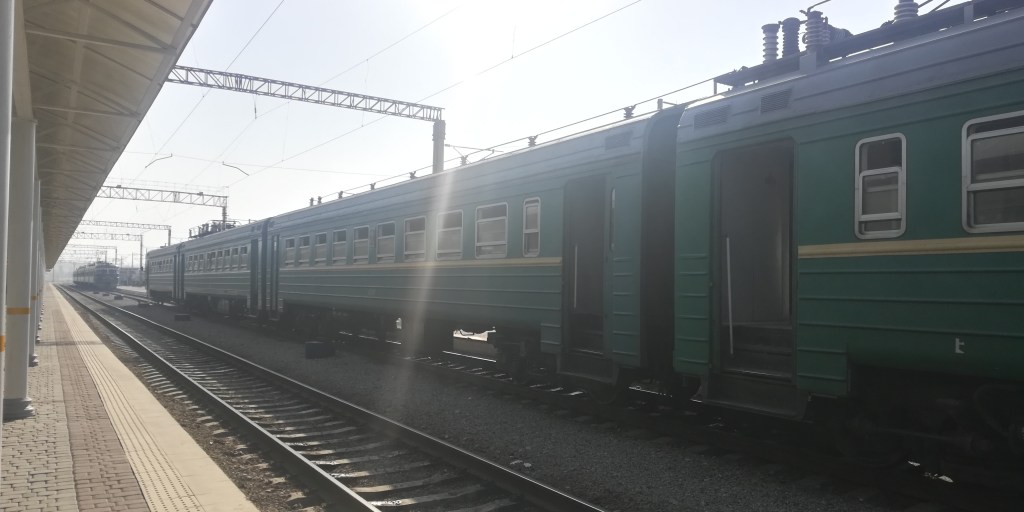
Before heading out to Samarkand, Bukhara and Khiva, I had spent a couple of days in Tashkent, staying in a hostel near Fargona Road. During that period, while spending most of my time queuing up at the Tashkent train station to book train tickets for the journeys ahead, getting hold of the best SIM card deal that “suited my travel needs”, and making visits to banks to exchange Dollars into Soms, I found out that the city was not at all like what I had imagined it to be.
Tashkent seemed like a dusty, gritty, worker’s city with streets that had more stray dogs than people. In the evenings, as I took walks around the dark streets around my hostel, I saw lifeless human bodies, floating back to their homes from work. Kids played around but there were hardly any smiles. The only time I heard people talking was when their were arguing with one another.
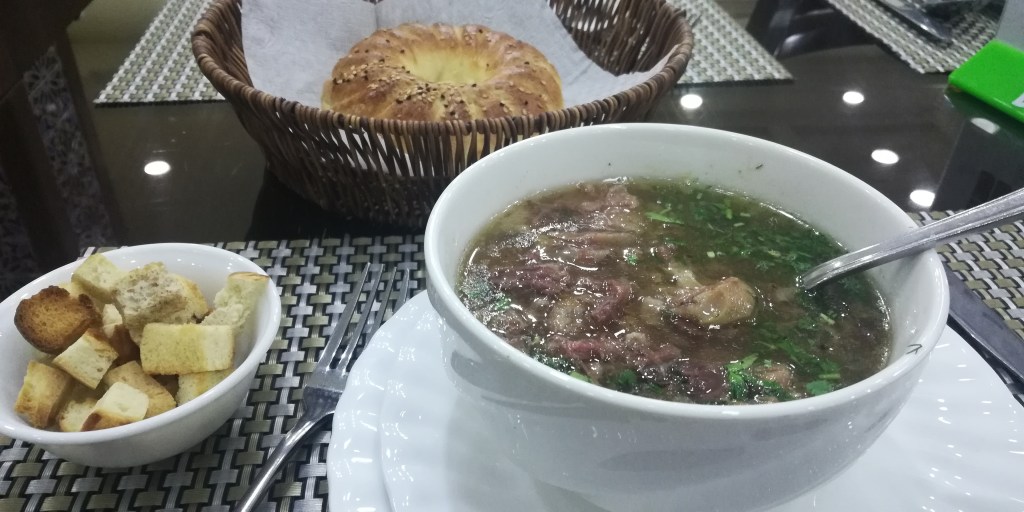
On my first day, after checking in and taking a shower, I followed the directions given by the hostel staff and went out looking for a place to have lunch. I must have gotten lost somewhere along the way (something I have found out that I have an uncanny knack for) because every place I went to was either closed for the time being or had closed down permanently and have now become a car dealership or a repair shop. The only place that was open was a Chinese restaurant. I don’t exactly remember the name of the place but it was something that non-Chinese owners would keep to make the place sound Chinese; something like Shaolin Temple or Shanghai Centre.
Finally, after a lot of walking and sweating, I found a joint by the side of the main road next to a car wash that looked pretty local. A man was cooking pieces of meat on a giant grill in front of the shop. The delicious aroma and the three dogs sitting nearby the grill, tongues wagging while they lusted over the meat, was enough of an endorsement for me to enter in.
The server did not know any English and was probably serving a foreigner for the first time. To help me order, she invited me into the small kitchen and gestured me to look into a pot of plov and a plate of shredded meat, probably from the grill that the man was cooking outside.
Though I will not count it among the best plovs I have had in Tashkent, it did hit the stop and I left the restaurant pretty happy.
From my adulting experiences, I have established that two of the most unfriendliest interactions you can have with humans (using the term “humans” loosely here) are at service counters of busy railway stations and banks. The staff at these places are always unhappy and can get triggered at the most innocent of questions.
Don’t believe me? While booking a ticket at any train station in Mumbai, ask if they have change for your Rs. 2000 note. Or, go to a bank branch and ask them why your ATM card was not working. They will look at you like you have just spilled curry on their expensive, new shirt, before they take out their pitchforks and chase you out of the premises.
But my experience dealing with their counterparts in Tashkent was surprisingly pleasant. The counter lady at the Tashkent train station spent at least 10 minutes explaining the availability of trains, the different classes and their amenities, and the ticket prices. At the bank branch, the friendly staff inquired about my trip and offered me tea. I had entered into a parallel dimension that had great customer service.
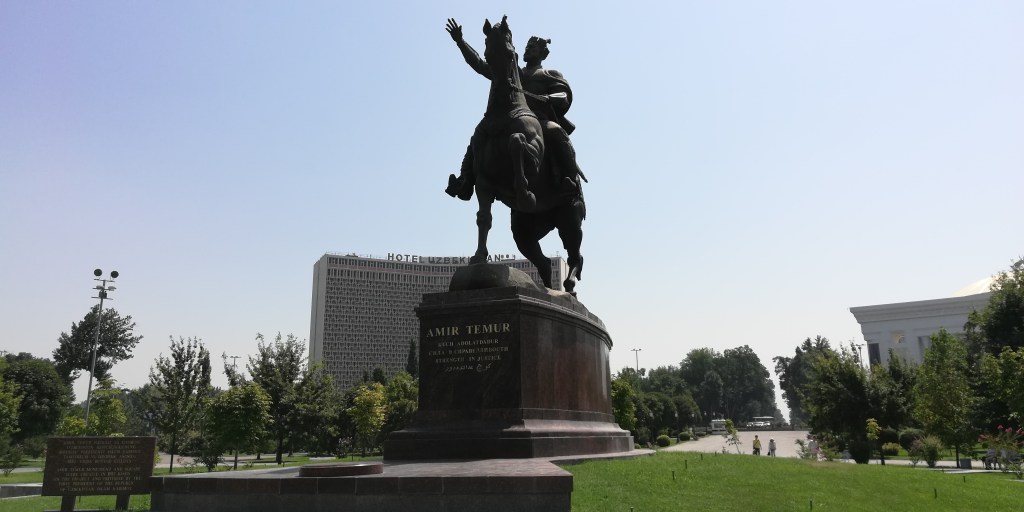
Before taking the train to Samarkand, I spent a day visiting some of the sights around Tashkent. First stop was the Amir Temur Square. It was a bright, sunny day; a couple of Centigrades above my liking, but managable. I walked to the small park in the center of the square where the iconic statue of the emperor riding his horse stood. Looking up at the statue, in the empty park, felt like the rite of passage that leads me deeper into the country.
“I see that you have finally arrived.” I could imagine the emperor say.
“Yes, finally. I would have come earlier if the visas were not so tedious.”
“What are these visas you talk of?”
“They are like permissions to enter a foreign country. You have to like submit a whole lot of papers and applications at the embassy and then hope for the best.”
“Why don’t you just barge in with your army like I used to do?”
“I don’t have an army, sir.”
“A man without an army is like a bird without wings.” He says in his booming royal voice. ” Now leave.. its time for my nap.”
As I walked away, I could hear him mutter to his horse. “What a loser!”
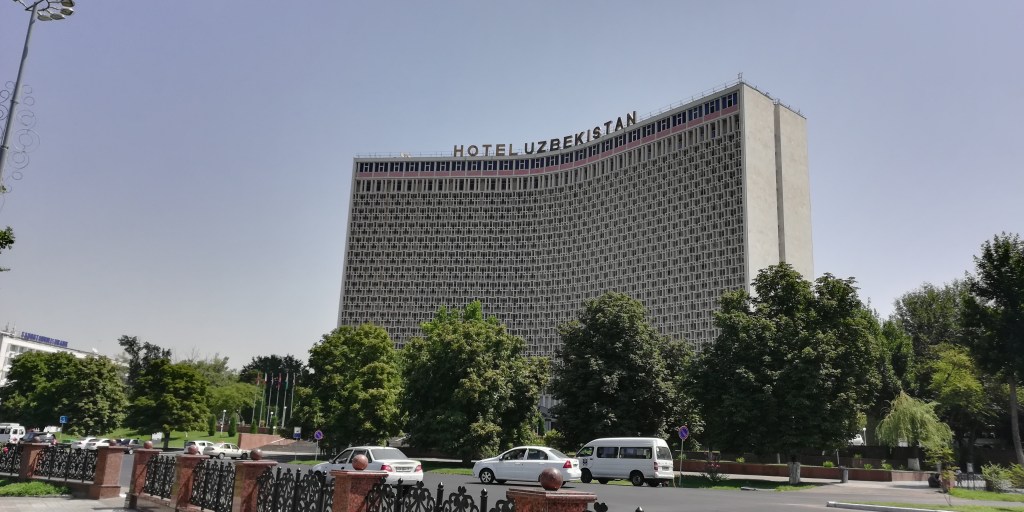
At the back of the statue is the famous Soviet era building, Hotel Uzbekistan. It is a multi-storied structure that boasts of a long history of hosting eminent personalities from around the world, including the renowned Indian actor, Raj Kapoor.
Having read that the hotel still operated, I walked up the stairs to the entrance gate and entered the lobby. From the inside, the hotel had the air of a place that was well past its prime. It did however possess an old-world charm; a quality that I feel is highly undervalued and under appreciated. The high ceilings, the out of style furniture, the traditional wooden reception desk, the uniformed bell-boys, it had it all.
Next, I walked to the nearby Amir Temur museum. It is an artistically designed circular building that houses the ancient Qurans, articles from the royal court, details and paintings of various conquests and life sized pictures of the royal family. It is provides window into the life of the emperor and his empire, about which I will learn more of over the next couple of weeks as I travelled around the country.
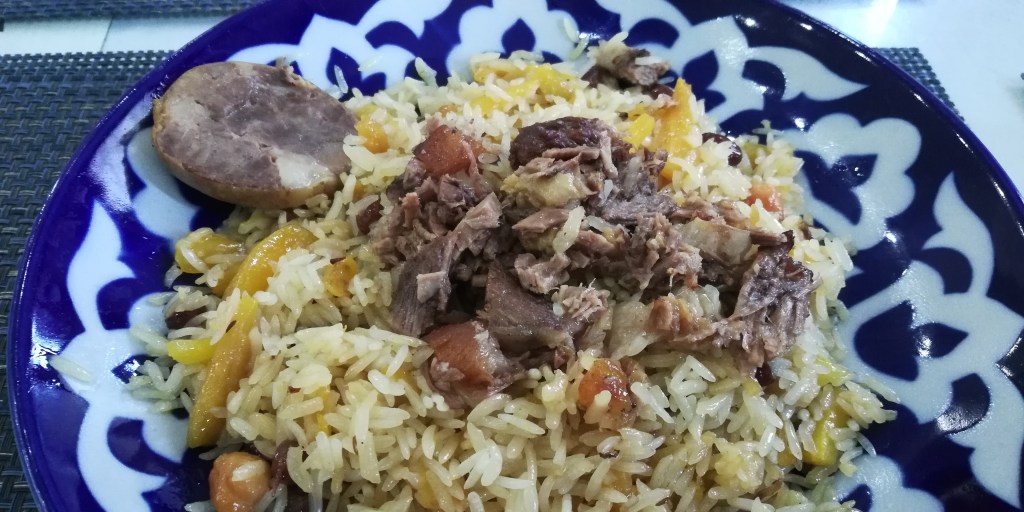
Near the Tashkent TV Tower, in a quiet street off the main road is an establishment that serves the best plov in the city. Named the Plov Centre, the moment you enter through the iron fence, you see large, swimming pool sized cauldrons cooking the national dish of the country. The main hall is a giant dining room, full of people at all times of the day. The waiters rush along, balancing multiple plates of food on their hands. The clutter of the cutlery and the constant hum of hundreds of people enjoying the plov is an experience in itself. On the face of it, it may seem like utter chaos, but if you observe closely, you would find that it is a super professional set up with a set of amazing staff serving their patrons with utmost efficiency.
“Plov and Qazi” I ordered confidently. I had done my homework, and I knew exactly what to order. Qazi is horse meat. It was the best plate of food I have had in a while and I promised myself that I would go back there again once I returned to the city from Khiva. (Which I did)
The hostel I was staying at deserves a special mention as well. It was managed by a very friendly man from Pakistan. Every evening they threw a “watermelon party’, in which they would cut a big ass watermelon and invite all the guests to share it. People from around the world would sit around a table in the courtyard and eat a watermelon together.
During my stay at the hostel in Fargona Road, thanks to these watermelon parties, I would meet an inspiring 68 year old Japanese painter. His dorm bed was surrounded by his paintings of still objects he had seen around the hostel; an apple, a lantern, a portrait of Rashid- the hostel manager and ofcourse, a watermelon. Every morning, he would wake up early and prepare his paints while sitting under the morning sun in the courtyard. What a guy!
I would also meet an Ukranian guy who told us that elections were coming up in his country. “Its pointless.” He said, after taking a bite out of his piece; juice squirting out onto the table as he did so. “Putin will be running Ukraine from behind the curtains.”
Not all memories of the hostel were pleasant though. I was sharing my room with a group of Bangladeshi guys.
“Tumi Bangla ki kore jaano?” One of them asked me when I talked to them in Bangla on my first day. (“How do you know Bangla?”)
When I told them that my parents were Bangalis from West Bengal, one of them said, and I remember this because it led to a surge of irritation through my system.
“Acha… aamra Bangladesh theke… asol Bangali.” He smiled proudly. (“Ok. We are from Bangladesh… pure Bangalis“)
“Fuckers, your country would not exist had it not been for us.” I wanted to say, but to keep things cordial, I cracked a forced smile.
Part II
Our Uzbekistan Airlines flight takes off shakily from Urgench and after about an hour, of what can pretty safely be termed as an uneventful albeit slightly amusing journey because the middle aged steward kept asking the passengers if they needed water to drink, touches down in Tashkent. I said yes the first two times he offered but when he came over the third and fourth time, I wondered if there is something as a state of over-hydration. After we landed, I saw a lot of passengers rushing to the lavatories at the Arrival hall of the Tashkent airport.
Outside, the sun is at its peak but after spending almost three weeks in the region, I am used to the heat. Excited taxi drivers were buzzing about, asking every moving thing if they needed a cab. Though insistent, they are not the aggressive kind. I scan through the group and start my negotiations with the most friendliest looking one.
“50000 Soms.” He says confidently, after I showed him the address of my hostel on my phone. This time I am staying at a hostel near the Khalid Alimjan subway station.
I shake my head to show my disagreement and fake an expression of outrage at being quoted such an unreasonable price. Truth be told, I have very little idea of how far my hostel is and how much the actual price should be.
“20000 Soms.” I counter.
“No.. No.. No… 50 good.”
Finally, after a lot of deliberations, we mutually agree that he was asking for too much and I was offering too less, and settle at 30000 Soms.
My new hostel was good, for the most part. Nice courtyard, great location, comfortable beds and friendly staff who insisted I have their complimentary breakfast every morning.
“You don’t like the breakfast we are serving?” The receptionist asked me in a pained voice, when he caught me rushing out one morning. I was going to the famous Chorsu Bazaar which is famous for its food. So, when he asked if I have had breakfast, I told him that I will grab something outside. I explained my plans and promised that I will have breakfast at the hostel the next morning.
The only problem at the hostel were the shared toilets and showers. They might be the dirtiest and smelliest lavatories I have had the misfortune of using in my travels. The showers had a curtain instead of a door, and it was not big enough to hide what was going on inside. Long story short, as great as the hostel otherwise was, I saw a lot of sights that no man should ever see.
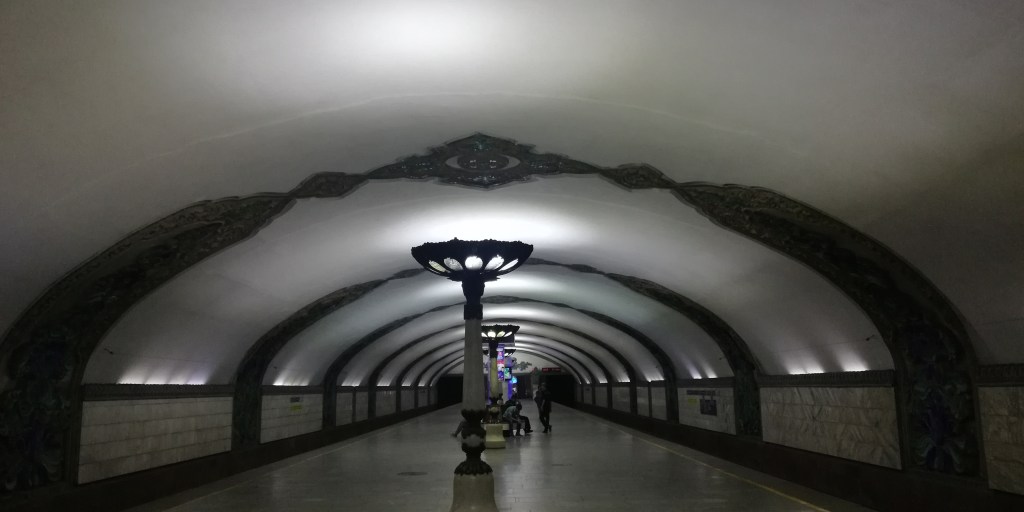
The Tashkent subway stations are reminiscent of the Soviet-era, studded with the elaborate artworks and chandeliers that would not look out of place in a palace somewhere. As you stand on the giant escalators taking you to and off the platforms, it is not uncommon to get flashbacks from your time in Moscow or Saint Petersburg.
In the heart of the city is the Chorsu Bazaar. With a history spanning more than a century, the blue dome of the bazaar will become a familiar site as you travel around Tashkent. Step inside the madness and you see hundreds of shops selling fresh produce from the farms of the country, pictures of chickens, goats, sheep and horses hang along with their skinned carcasses, smell of different spices that may range from vaguely familiar to totally foreign, sweets that can make you forget about your diet, breads of different kinds, clothes for all occasions and of all price ranges, utensils and anything else that you may need to run your household, and hundreds if not thousands of people, buzzing about at all times of the day. The food court is just as mad with stalls heaped with different kinds of samsas, horse meat pastas, lagman soups, shashliks and other incredibly enticing dishes that I don’t know the names of. It’s food frenzy at its finest.
As great as the food scene in Uzbekistan is, one thing you would not fail to notice is how much cola Uzbeks consume. It is not rare to see two people chilling out, sharing a big bottle (2 litres?) of Coca Cola. If I was an endocrinologist, it won’t take much convincing to open my clinic here.
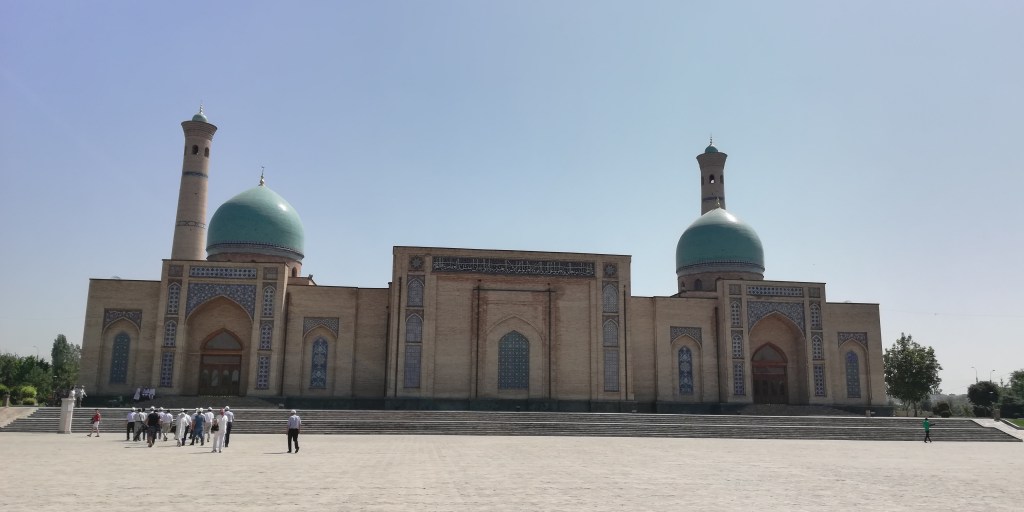
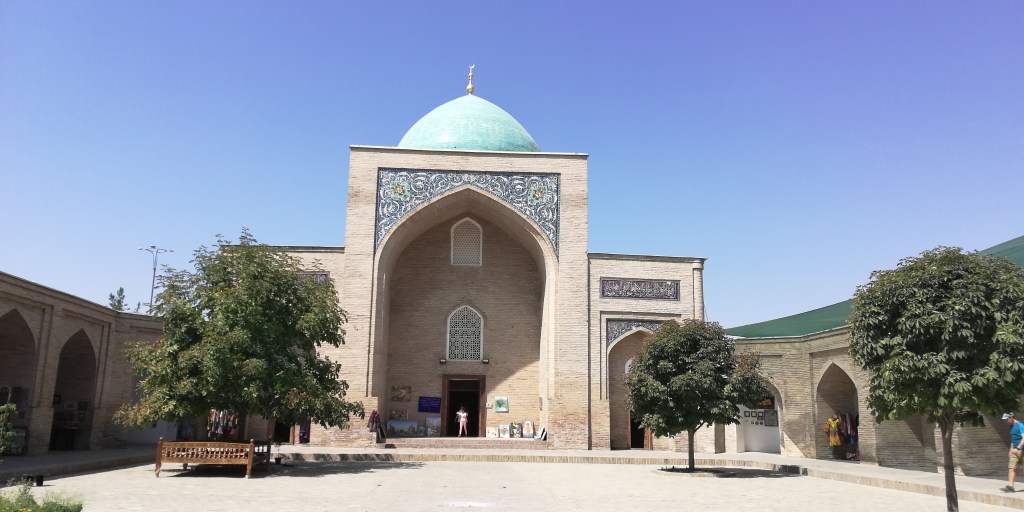
Another place that you should not miss in Tashkent is the Hazrat Imam Ensemble. This is the religious centre of the city dotted with ancient mosques and madrassas. The most prominent landmark is the tomb of the first Imam of Tashkent, Hazrati Imam, who was also a scholar, poet and a talented craftsman. Be prepared to stand in long queues of pilgrims and tourists, if you visit at any decent hour of the day.
One thing I missed experiencing in Russia was seeing a circus. I have heard that they are famous for their gravity defying acrobatics. Back home, on my way to work everyday, I see a poster, pasted on an over bridge pillar, of a local circus troupe performing somewhere nearby. With a picture of a smiling white lady sitting on top of an elephant, it proudly advertises “APOLLO CIRCUS. NOW WITH PERFORMERS FROM RUSSIA! SHOWS AT 4 PM, 6 PM AND 8PM. TICKETS START AT Rs. 100!”
As wonderful as that ragged old poster looks, I have a feeling that the troupe had already moved on, forgetting to take off the poster before they left. I can imagine unsuspecting circus enthusiasts roaming around an empty field in Ghatkopar, wondering where the Russian performers were. The folks running the Apollo Circus are assholes, I tell you.
Sorry, I digress. I was only trying to convey how excited I felt about visiting the Tashkent Circus.
I walk up the stairs leading up to the beautiful circus building and find that the gates are locked shut. On the barricaded gate, a piece of A-4 sized white paper with something in Uzbek written on it, is pasted. I ask a lady standing nearby, who had brought her two kids along to see the circus, if she knew when the next show was. Luckily, she spoke a bit of English and told me that the notice says the next set of shows are scheduled two weeks from now. I think I looked more disappointed than her kids on hearing that piece of news.
Right across the road from the Tashkent Circus, passing the fountains where kids played around while their parents sat under the shades of the trees, is another iconic food joint; the National Food Restaurant. Kebabs grilling around the sidewalk, outdoor tables with a big air conditioned hall alongside and big pans and cauldrons cooking traditional dishes of the Uzbek cuisine, this place is a must visit for any food lover. The place is busy through the day and gets especially frantic once the sun goes down, when you would see families enjoying dinners with an elaborate platter of dishes decorating their tables. The soup and plate of haleem I devour, help me recover from the sadness of not seeing the circus.
I get up early in the morning and in order not to offend the hostel manager, grab some breakfast at the hostel. It is a varied spread of cakes, breads, eggs and sausages. On the breakfast table, I get to know that a lot of the people at the hostel are long term guests; staying there while having a job somewhere in the city.
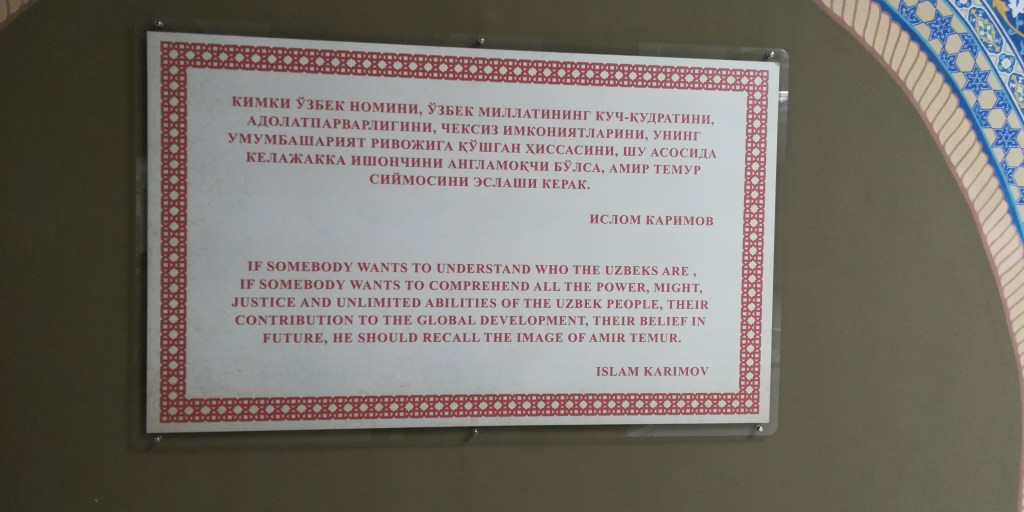
On my agenda today is visiting a museum dedicated to Islam Karimov, who was the head of Uzbekistan SSR and when the country got its independence in 1991, became its First President, serving till his demise in 2016. Internationally, he is considered to be a controversial figure since he has routinely been accused of stifling political opposition and engaging in human rights abuse. Be it out of fear or love, he is held in very high regard in Uzbekistan. With Google Maps guiding me, I head out in search of the museum.
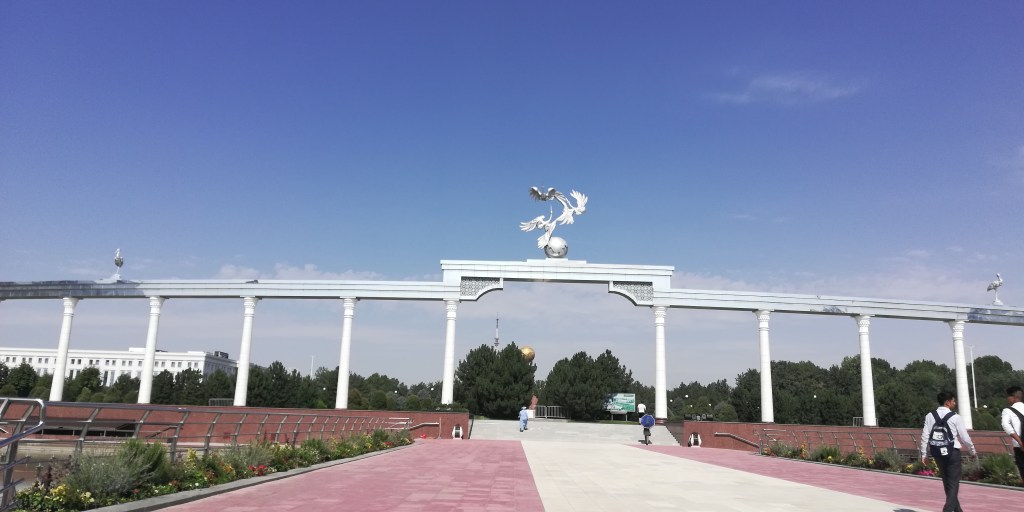
I make my way through Independence Square, which is a large, green park of historic significance. Families picnick under the trees, workers tend to the plants and grass and guards patrol around, keeping things in check. The park now serves as the venue of the state’s festivities and is known to play host to many cultural events. The mammoth gate of the park is decorated with sculptures of storks, signifying that the country is now in an era of peace and prosperity. Lined with fountains and people taking selfies in front of it, I enter through the gate and reach the Independence Monument. This square used to be known as the Lenin Square back in the Soviet times and a statue of Lenin used to stand here. Upon independence that statue was replaced by this monument shaped in the form of a globe, symbolising Uzbekistan’s arrival to the world scene.
I walk through the park, studded with monuments and lined with offices and institutions of governance. Though busy roads surround the park, there is a sense of serene and quiet inside; a welcome break from the noisy city life. Google Maps lead me to the front of a heavily guarded gate, where the armed guards tell me that the museum entrance gates have since been changed. They guide me towards a path, alongside a stream, that led to the new entrance gate of the museum. Its a shaded path and I could see people taking dips into the water to escape the heat and humidity. Some swim while others sit by the water with bottles of vodka and beer and freshly cut fruits, enjoying their day.
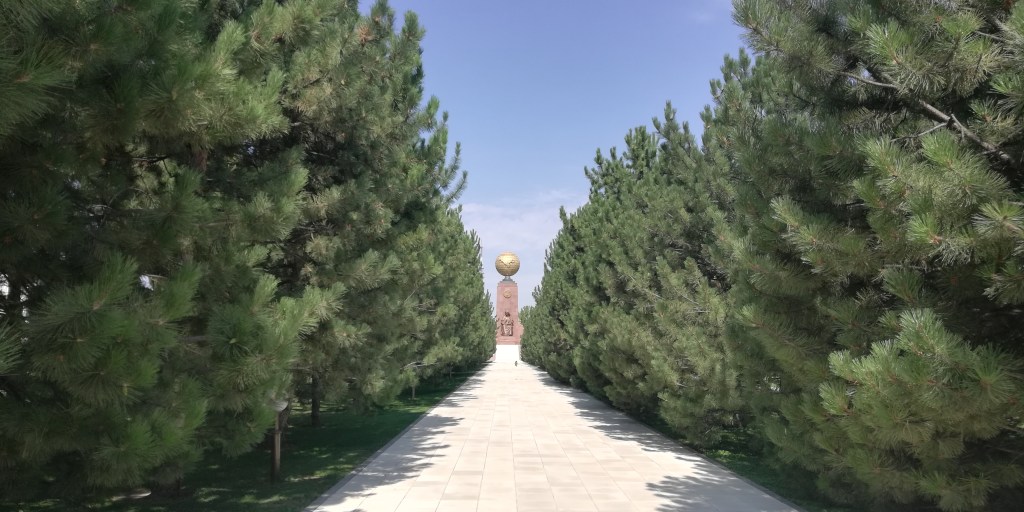
The museum turns out to be a photo exhibition of the leader’s meets with other world leaders, including the current Indian Prime Minister, Narendra Modi. In a separate hall, you see life sized portraits of Mr. Karimov, the gifts he had received, quotes from his important speeches and medals that Uzbekistan had won in the Olympics.
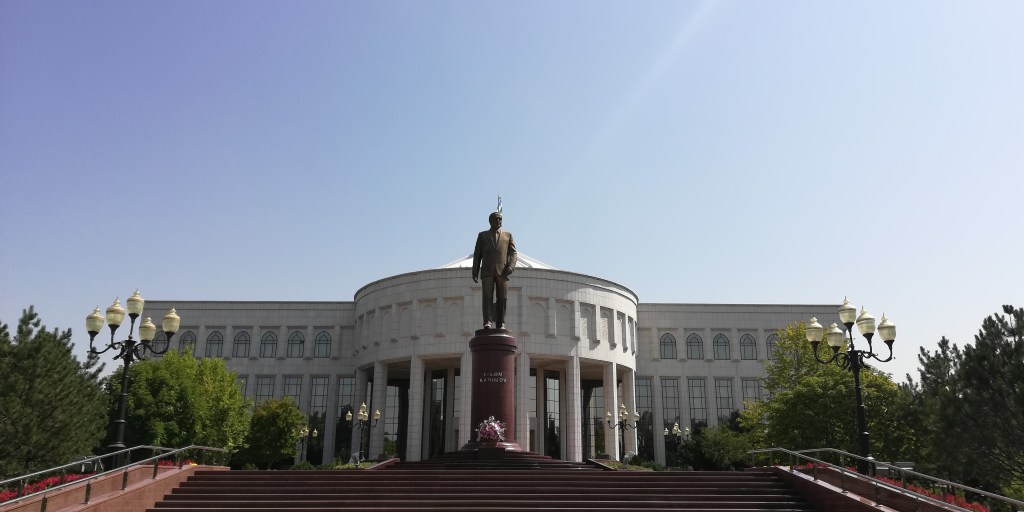
Right outside the building is a huge statue of the leader. As expected, being a place of immense political importance, the area is under heavy surveillance.
“Can I take a picture?” I ask one of the guards protecting the statue with automatic weapons. He nods, authoritatively.
Once I had taken the picture, he asked me to show him the picture I had just taken; probably ensuring I had not used some silly puppy filter.
I didn’t, of course.
I wonder what would have happened if I had though. Would I be jailed? Deported? Shot?
I know when someone did something like that back home, he has ostercised and several FIRs were filed against him.
Thou shalt not joke about the Supreme Leader.
Part III
By the time I was nearing the end of my stay in the country, I felt like I had gotten to know the city quite well. I had seen the rougher and the nicer parts of Tashkent. I had seen the many museums and mosques around the city and had developed a fascination for the history and culture of this beautiful country.
But, to me at least, the biggest joys of travel do not lie in visiting the majestic palaces or ancient monuments. They lie in the smaller, more mundane things, like taking long walks, exploring local markets, tasting the food, using public transport, hanging out in small cafes and bars. And, Tashkent more than delivered on these counts.
One of the places I frequented during my stay was the Irish Pub located on the Taras Shevchenko Street, right opposite the Museum of Geology. Soccer matches from around the world playing on the giant screens, great music, wonderful staff and delicious cold beer; all things you need after a day out in the sun.
Another one of my favourites was a small cafe, with outdoor seats, overlooking a busy street, serving a varied range of coffees and cakes. Despite the homely, neighbourhood cafe vibe, this place for some reason did not seem to be as popular as the other ones around that street. But that worked to my advantage, as I could order a mug of americano and maybe some cakes, if I felt a bit hungry, and just chill out after a long walk.
In the evenings, the road leading from my hostel to the cafe would light up. Office buildings nearby became canvasses for dancing lights and the cool evening breeze brought everyone out to the restaurants and shops all around.
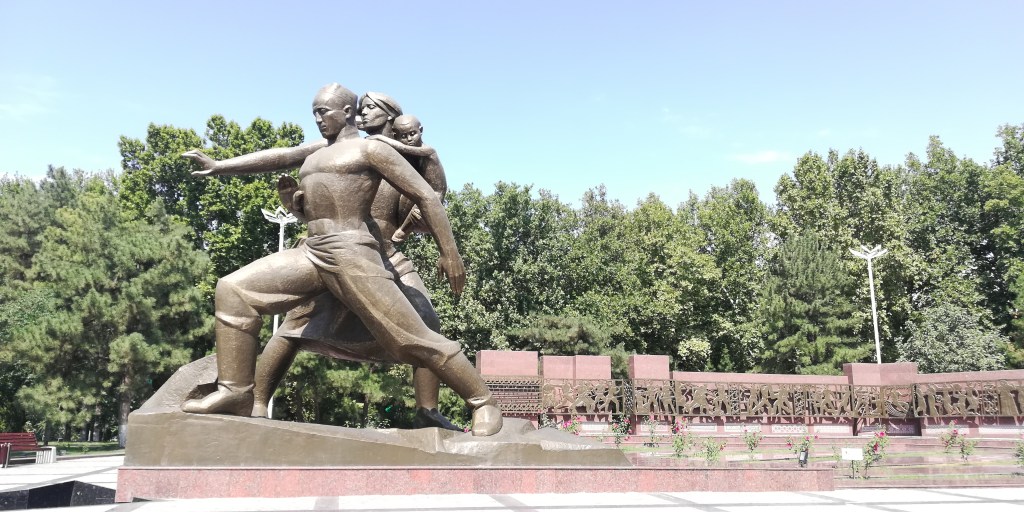
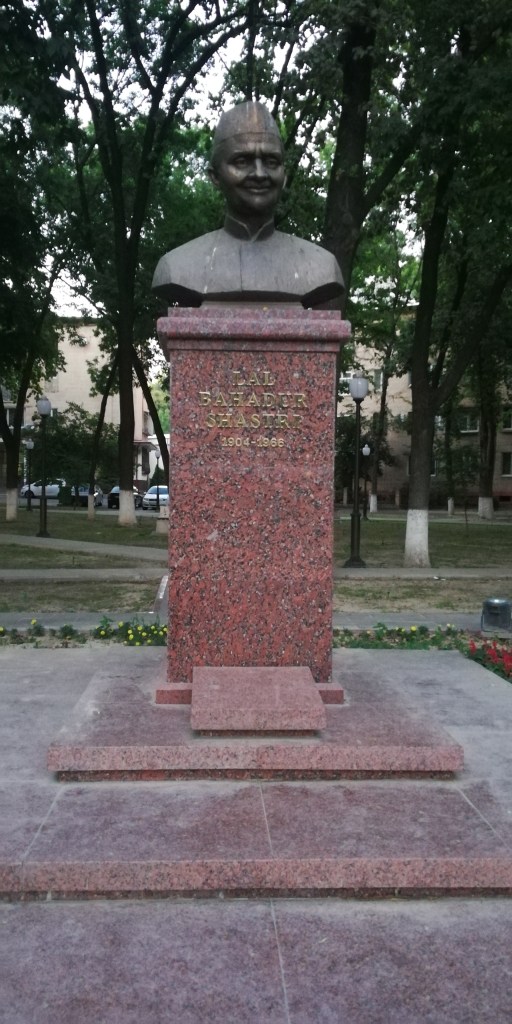
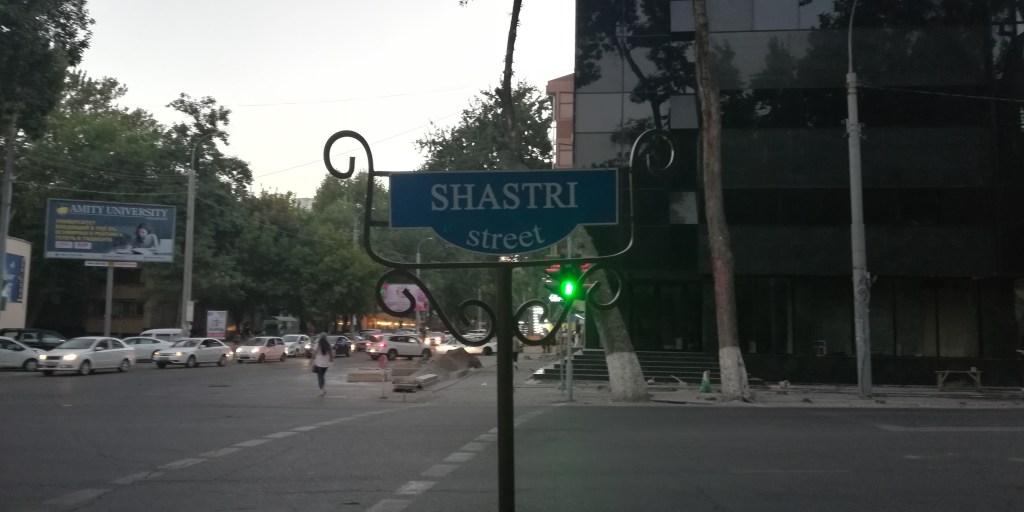
On one of these evenings, I follow the directions of Google Maps to a landmark that will be of interest to any Indian; a monument dedicated to the 2nd Prime Minister of India, Lal Bahadur Shastri. During the course of this journey, I would learn that not just a monument, but an entire lively street has been named in his honour.
For those who don’t know, Shastri was a decorated Indian politician who had participated wholeheartedly in India’s freedom struggle. He had been jailed by the British several times, but had always remained loyal to the cause and had participated with Mahatma Gandhi in the Salt March and Non-Cooperation Movement. After independence, he would go on to head several ministries and took forward the initiatives of increasing the country’s food and milk production, known more commonly as the Green Revolution and White Revolution respectively. The popular slogan “Jai Jawan, Jai Kisan” (Hail the soldiers. Hail the farmers) was coined by him.
Such is the stature of the man that the entire country, including his political opponents, had and still have, immense respect and love for not just his contributions to the nation but also to his charming simplicity and calm demeanor.
In 1965, India and Pakistan clashed over the disputed region of Kashmir. This was the second Indo-Pak war in which, as per official figures, close to 20000 human lives were lost, both sides combined. In January 1966, Soviet Union invited the Indian Prime Minister, Lal Bahadur Shastri, and the Pakistani President, Ayub Khan, to Tashkent and an agreement was signed to end the hostilities.
Lal Bahadur Shastri passed away in Tashkent, the day after the agreement was signed.
The directions of the Google Maps leads me to a vacant park near a bunch of residential buildings. Under the fading evening light, I stand at the spot where the monument is supposed to be as per Google Maps. I look around, but apart from a few rusty slides and monkey bars, I don’t see much. The unchecked growth of grass and shrubs around the park reek of sloppy maintenance.
I ask a man heading home from work, if he knew where the monument is. Though a bit surprised at being approached by a foreigner, he tries his best to help me. We try conversing, but not to much success.
“Lal Bahadur Shastri monument?”
“Indian Prime Minister?”
I try but all I get is a blank look. Damn it!
Part of me wants to give up, but I urge myself to keep trying. I show him a picture of the monument on my phone and his face lights up. He points towards the busy road I had come from and then points left.
Bless the man and his directions, as I find the monument a short walk away to the left; a stone pillar with the bust of the leader on top with a blooming bed of flowers at the front. Around the monument are a couple of benches, where a few people sit, fiddling on their phone and watching the traffic rush by. I am met with curious looks as I take a few pictures of the monument.
I find a place to sit on the bench near the great man and enjoy a few minutes of the cool evening breeze and the activities all around. With cafes, restaurants, markets and a busy intersection, the Uzbeks have granted our departed leader a piece of real estate at a prime location.
Lal Bahadur Shastri shares his birthday with Mahatma Gandhi and I wonder if it is just coincidence that two of India’s greatest sons were born on the 2nd of October.
My flight back home leaves at 4 AM and I find myself wondering in the evening if it makes sense to go to bed at all. I want to make the most of my last night. I give in to my excitement and after a long walk and a cup of coffee at my usual cafe, I book a Yandex cab on my phone and pay another visit to the National Food Restaurant; this time for dinner.
On this night, the restaurant is especially busy. The usual sights of kebabs grilling and different dishes on display outside the kitchen, makes me hungry. Knowing that this would be the last meal of the trip, I order some shashlik kebabs and a meat stew that everyone seemed to be having.
Tiny water sprinklers keep the outdoor seating area comfortable. People walk by on the road outside, some slyly peaking in to see what we are having. The buzz all around makes the place feel festive.
After a leisurely long dinner, I pick myself up and take a walk around the area. I see a lot of lights in the distance and join the crowd of pedestrians heading that way. It’s Saturday night and the whole city is out enjoying the beautiful weather.
The source of the lights turns out to be a small fair, with rides for kids, food stalls, ice cream parlors and cotton candy vendors. Kids play around noisily, while their parents keep an eye on them from a distance. Three cute ponies, all dressed up in red, are being patted lovingly by everyone passing by. They are the stars of the fair.
As carnival like as everything is, it is a heartbreaking way of leaving the city and ending this trip. Standing near the fence of a nearby park, watching this scene, I can’t but help reminisce about all the places I had been to on this trip.
From losing by bag in Baku to almost losing my limbs in Nur-Sultan. From the peace and serenity of sitting inside mosques to the feeling frantic environment of crazy markets. From the lovely people I had met to the delicious food I have had. From futuristic buildings to centuries old madrassas. Its been a beautiful journey. Its amazing how despite the language barriers and cultural differences, I feel one with this region.
Back in 2011, I nervously picked up my backpack for my first solo trip. Heading out the door that night, I felt a range of emotions; happy, curious, excited, nervous and yes, I admit, scared. Its 2019, nine year since, and I still feel exactly the same way every single time I step out of the safe confines of my home with my backpack.
But one feeling that has overshadowed all the others, is the sense of being free. The feeling of not being bound to one place. To escape the daily routine. To live out of a backpack. To meet new people. To see new places. To eat new dishes. To learn new things about the world.
The seeds that the 2011 trip sowed inside me, have taken me to many beautiful countries and have now brought me here.. in Uzbekistan.
I hope that this journey never ends.
Through the lights all around, I see the red and white glow of the subway station entrance, as if reminding me that it is time head back. I need to go back to the hostel and pack my bags. This trip is at an end.
As I walk through the crowd towards the entrance, I tell myself what I always tell myself in these times.
“One trip must end, for the next one to begin.”


Leave a Reply