
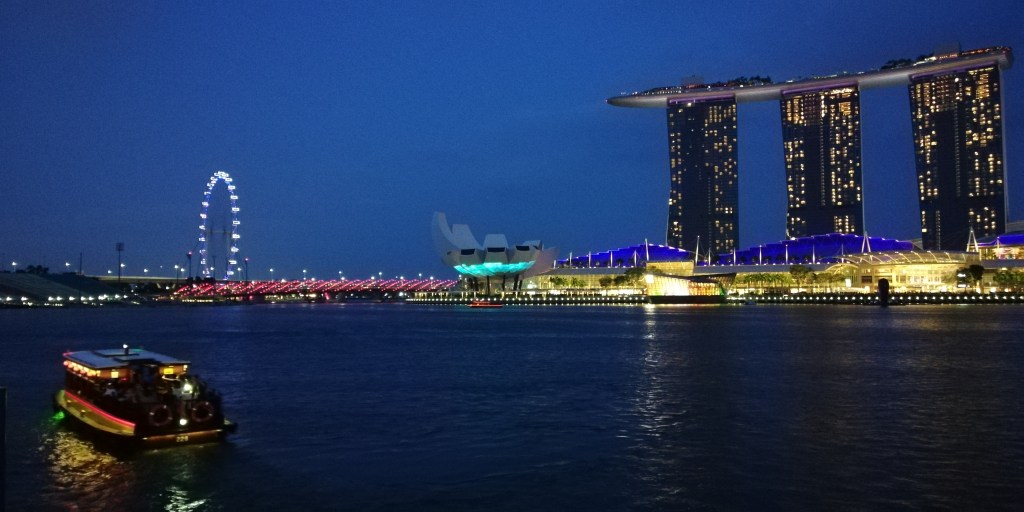
The Singapore River flows to my right, dark and grim under the clear night sky. The lights from the building on the banks of the river cast reflections as boats full of tourists sail past the narrow channel. They wave and take pictures excitedly.
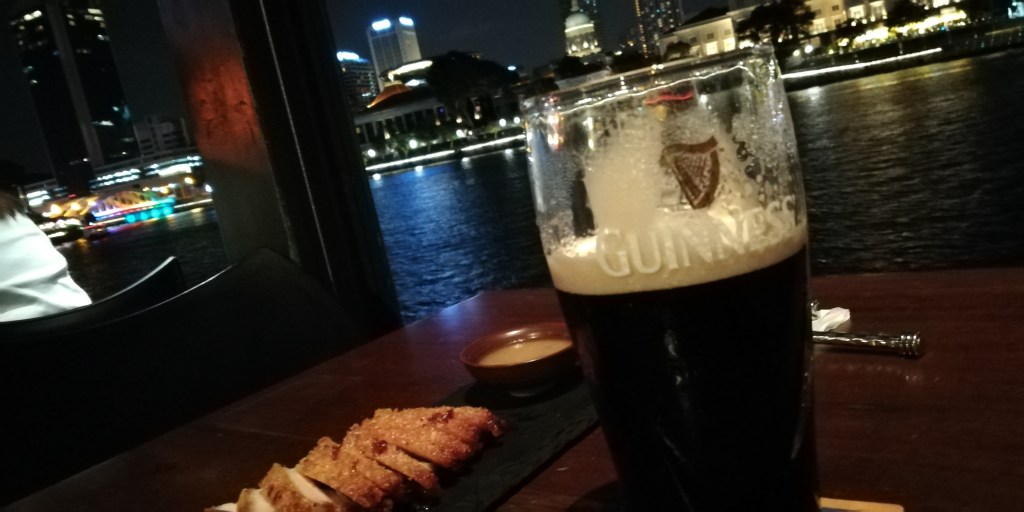
The waitress returns with my order of sliced steak and beer. The breeze playfully tries to sweep away the paper napkins from the table but she catches them in time and pins them down under the hardbound menu booklet. On the TV screen at the corner Leicester City plays Watford. It is a pretty close match but no one seems too invested. After a day of heat and humidity, everyone is busy unwinding in the soothing music and relaxed ambiance. The pub where I sit, The Penny Black, is buzzing with locals and tourists alike. Located on the banks of the river, it is the perfect place to spend my last evening in the country.
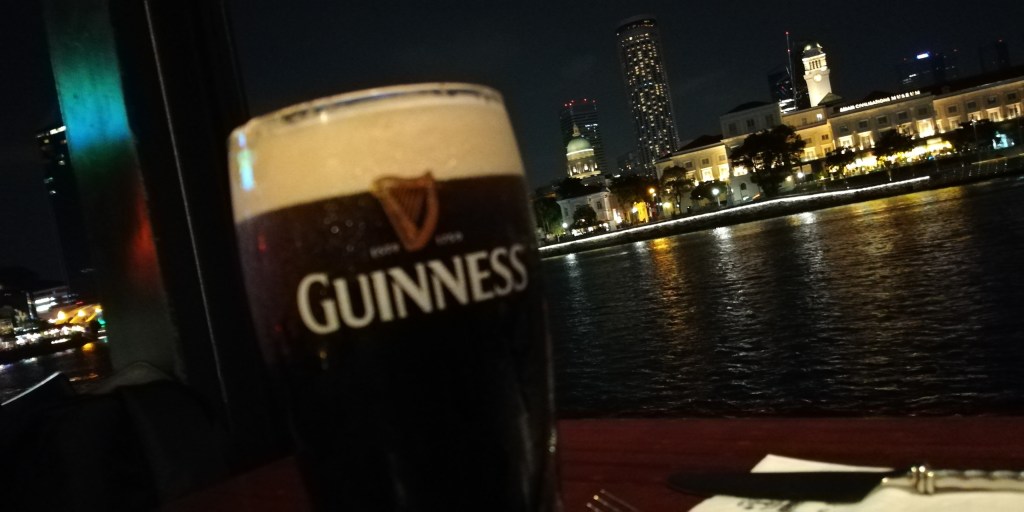
I could have visited Singapore several years ago, but I chose not to. Though everyone I know who have visited here had nothing but the nicest things to say about it, from their words and pictures, Singapore seemed too easy. Too plastic. Too mainstream. Too touristy. But here I was now, in the heart of Singapore, after spending a total of eights nights in this small country, wondering why I felt so happy to be here.
We all have perceptions about ourselves. The person that we think that we are. Some think they are foodies. Some, scholars. Some, good cooks. I always felt I enjoyed places that were a bit off the beaten path. Places that are a bit harder to travel to. But the fact that I enjoyed my time in Singapore so much went against that notion I had about myself.
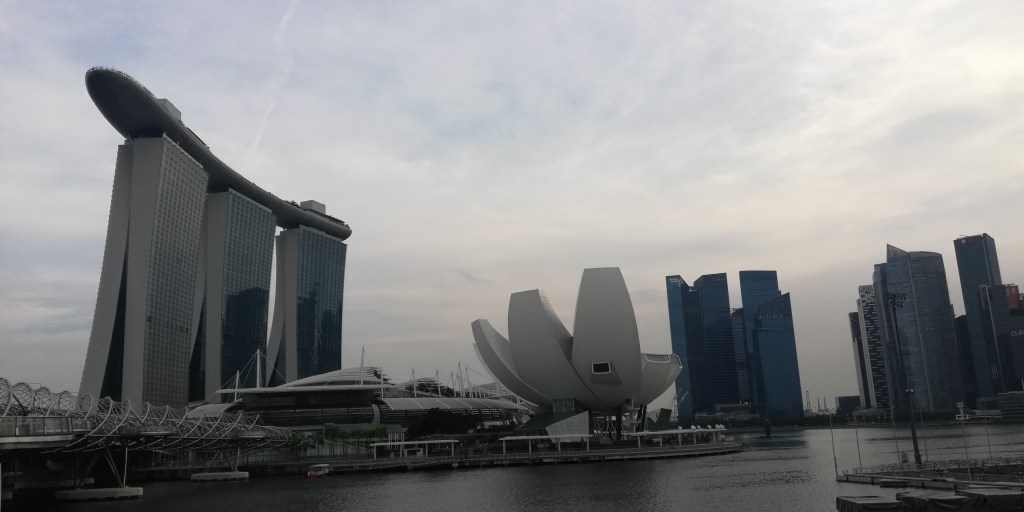
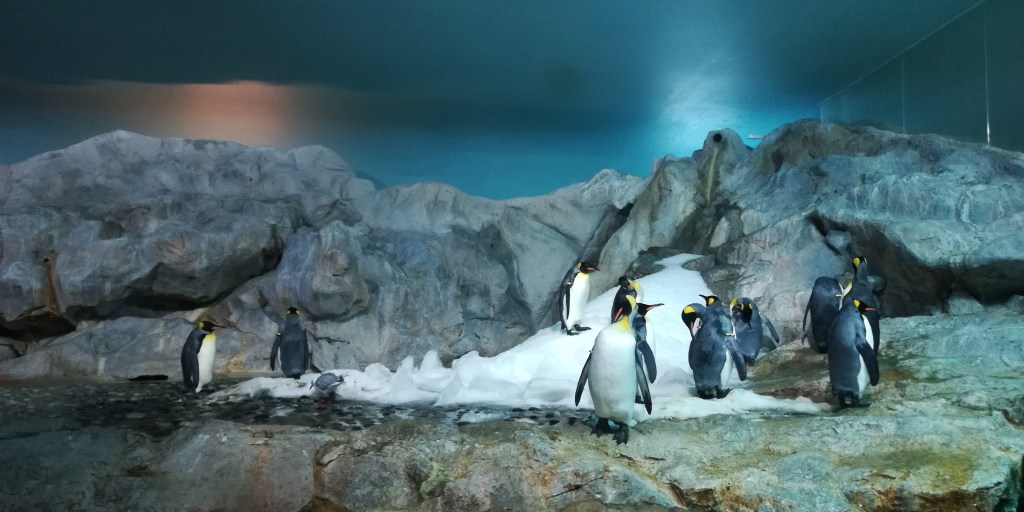
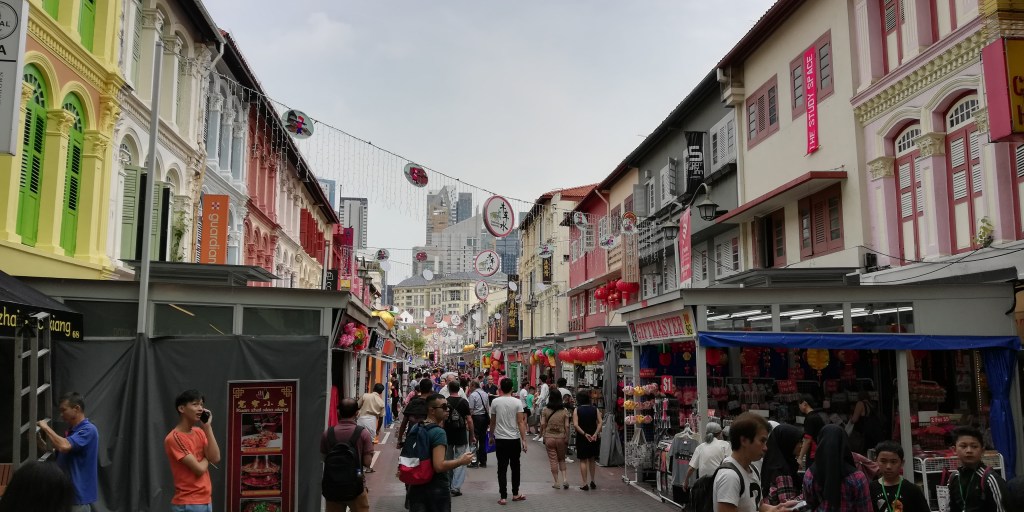
I saw my first Macatau monkey at the Singapore Zoo, followed by cute Hornbills and Penguins at the Jurong Bird Park. I went to a mall in Orchard Road and had an ice-cream. I did some shopping at Chinatown. I even took a selfie with the Marina Bay Sands in the background.
“At least I did not go to Sentosa Island.” I console myself, while secretly knowing that a part of me really wanted to.
In my defense, my visit to Singapore was not out of choice but out of convenience and practicality. The plan was to visit the Philippines. But as per their visa policy, as an Indian citizen, I needed to have a valid Singapore, US, Schengen, UK or Australian visa to avail visa free entry into the country. And Singapore was the most convenient out of all the visas to get and had cheap flights to and from the Philippines.
The steak is pretty good. Tender and juicy. Weird that they would serve it with a side of mango sauce and shrimp paste though. Delicious, but an interestingly confusing combination for my taste buds. In the table next of mine are a couple of guys engaged in hushed conversations. Out of curiosity, I strain my ears to eavesdrop on their conversation.
“I told Bonnie that she needed to talk to him but she wouldn’t budge.” I hear one of them say in a British accent. The other nods in agreement.
One day, back in 1998, some fishermen went off into the Java Sea hoping to find some sea cucumbers. What they found was something far more valuable. A 1200 year old shipwreck!
Known as the Tang shipwreck, it is said that the ship was made somewhere in the Arab world and was returning back with cargo from China. The remains of the ship and its cargo threw light on the importance of maritime trade back in the day and the kind of goods that were traded in those days in this region. An impressive gallery of the cargo is on display at the Asian Civilizations Museum just across the river from where I sit; its yellow lights making it stand out from the rest.
Singapore has always been a port city where merchants from all across Africa, Europe and Asia came to trade in ceramics, spices, silk, cotton and the likes. Many Indians, Chinese, Europeans and Arabs would come to Singapore looking for jobs and to set up trading houses. Many would decide to live here and start a family with natives of the country, laying the foundation for the diverse, vibrant, multi-cultural country that we see today.
Along the entire stretch of the banks of Singapore River, including where I sit now, traders negotiated business deals, loaded and unloaded cargos, exchanged currencies and hired crew for future journeys. It must have been very noisy, polluted and chaotic.
“Oh, there you are!” A lady from the table at the back gets up and greets this group of six elderly men that just entered the pub. She shakes the hand of one of the men, smiles and gives a quick bow to the rest. They join two tables together and order a round of drinks.
On the TV, Leicester City’s star player Vardy and Wartford’s goal keeper are writhing in pain after an ill-fated attempt at goal that resulted in a collision. Medical staff rush in to attend to them. The thing with footballers is you never know when they are actually hurt and when they are just acting to get a foul.
A short walk from the Asian Civilizations Museum is another important landmark. The Raffles Landing Site. It is said that in 1817, Sir Stamford Raffles, a somewhat tainted, high ranking official of British East India Company would set his foot in Singapore for the first time. He would go on to play a major role in colonizing the Malay Peninsula, set it up as a free port to compete with the Dutch maritime trade and lay the base for the Singapore we know today.
Being the father of modern Singapore, Singaporeans have honored him not just with the larger than life statue that stand on the landing site, but have also named hotels, stations and universities in his honor.
Raffles hotel is one such famous establishment in Singapore. But truth be told, its popularity has less to do with the name itself and more to do with what its Head Barman, Ngiam Tong Boon did in 1915. One of the most popular cocktails in the world, the Singapore Sling, was mixed here for the first time.
“It was taken to be innocent fruit juice. But it was blended with so much more…At last a gentleman could buy a lady a drink. At last a lady could socialize with the men.” A bottle of the drink proudly reads, right under the headline, The Iconic Cocktail.
“One more beer, sir?”
The clock reads 9 PM and I know I need to leave soon to pack my bags for my flight back home tomorrow. But that can wait.
“Yes, one more please.”
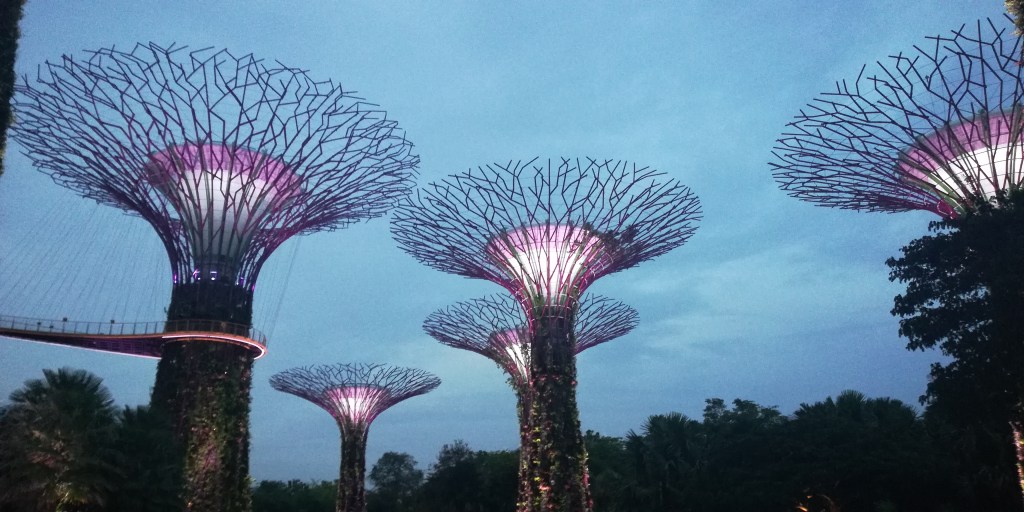
The location and the ambience are too nice for me to leave at this moment. But I do admit, I feel a little tired. Singapore has kept me busy and I have had about 4 hours sleep in the last 36 hours. Last night, I went to see the light and sound show at the Gardens by the Bay. The flower laden towers lit up and danced to the sounds of rhythmic beats as I and atleast 200 others sat on the park and pavements around, watching in amazement.
I then took a long walk through the Marina Square where I watched a local band play jazz, before taking a train to Chinatown to have a plate of the legendary Hainanese chicken-rice at the Maxwell Food Centre. This is where the late, great Anthony Bourdain shot a segment of his show and mentioned in one of his books. Late in the night, after a round of drinks at a bar close to my hostel, I managed to catch a few hours of sleep.
My alarm had rang early today morning and after grabbing a quick bowl of prawn noodles and coffee at a hawker stall nearby, I set out to catch the 9.45 am tour of a World War-II British bunker, commonly known as The Battlebox.
Singapore was witness to what Winston Churchill famously remarked as the “Worst disaster” in British Military history. It was here in this bunker that the last few British officers camped to defend the country as the Japanese trampled onwards through Malaya and Siam. More than 80,000 Allied forces were taken as POWs by the Japanese when British Colonel Arthur Percival was forced to surrender unconditionally to Japanese General Yamashita. The Japanese occupation was considered the darkest days of Singapore and is well demonstrated in the National Museum of Singapore.
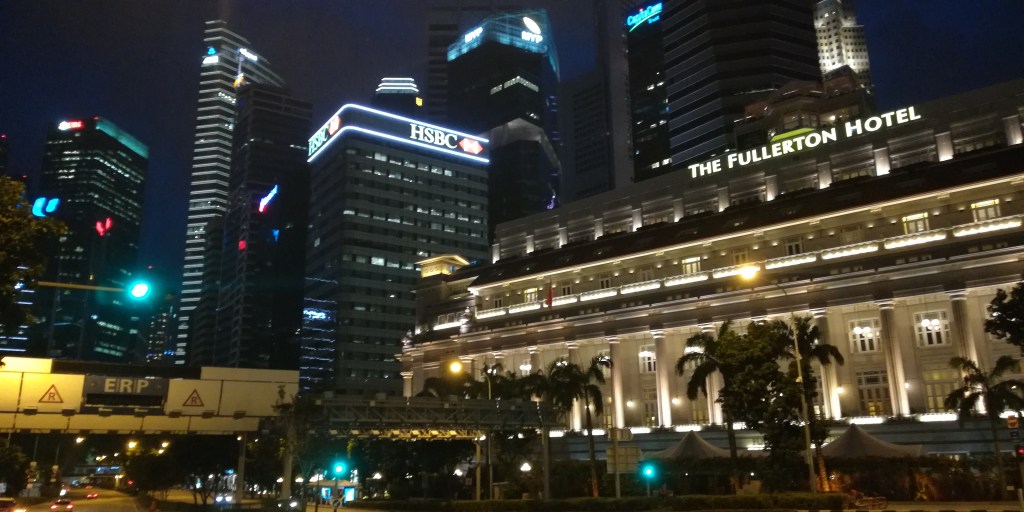
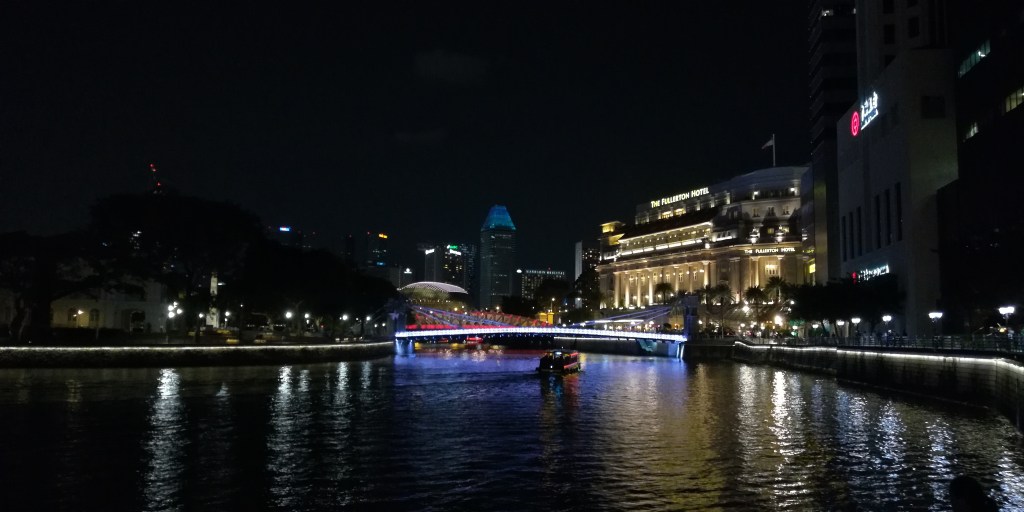
The Fullerton Hotel which is a stones thrown from where I sit has historical significance. It has served as a post office and the British military headquarters. The decision to surrender to the Japanese forces was taken in a room inside that building.
After dinner, I take a walk through the Marina Square one last time. Walking here, along the crowded promanade, have become an evening routine that I have grown to love. The skyscappers, home to offices of major banks and hotels, light up the night sky. People throng the shops and restaurants all around, enjoying an evening coffee or drink.
The popular Merlion statue is currently under maintenance; all covered up in scaffolding. The name is a combination of the word ‘”Mer” meaning “the sea”, symbolising Singapore’s origins as a fishing village, and the word “lion”, which finds its roots from the country’s original name. It is said that when a Malay prince first came to set up a new settlement here, he saw a lion. He was so impressed by the majestic animal that he named the place “Singapura”, a Sanskrit word that translates to “Lion City”.
From the lights and the music drifting in from the distance, I gather that another band is performing tonight at the boulevard. I make my way through the crowd, laden with shopping bags and posing for that perfect Instagram selfie with the famous Singapore skyline, and find a seat to watch the band perform. Though the lyrics are in Mandarin, I see people of all nationalities and ethnicities enjoying its rhythmic tunes. As they say, music is an uniting force that has a language of its own.
Despite all the growing industries and the busy businesses, there is something effortlessly easy about Singapore. In a world that is becoming more and more xenophobic by the day, it is the perfect example of what people in a modern day society should be like. Diverse, respectful, tolerant, disciplined and open minded. They are the reason why this country is home to such prosperity. Always have been.
Singapore is branded as an fun, family friendly, tourist destination, studded with amusement parks, shopping malls and five star hotels. But underneath all the glamour and glitter, you will find traces of the sleepy little village that it once used to be.
As the modern Singapore goes to work and works up the career ladder to satisfy its never ending materialistic dreams, you see the past enjoying the simple joys. A leisurely long morning cup of coffee at a hawker stall, reading the newspaper. Sitting on a stool by the sidewalk outside the house with friends watching people and cars pass by. Taking a stroll to the local market to buy fresh vegetables and meat. Performing an evening prayer at a nearby temple. A picnic out in the neighbourhood park with family.
It is this seamless convergence of the past and the present that makes Singapore so beautiful.


Leave a Reply